.png)


Aims Nano-Bio Convergence Letters (NBCL) is a premier international, peer-reviewed journal dedicated to the rapid dissemination of cutting-edge research at the intersection of nanotechnology and the life sciences. The journal aims to foster innovation and interdisciplinary collaboration by publishing high-impact letters, reviews, and perspectives that bridge fundamental discoveries with translational applications. NBCL seeks to advance scientific understanding and technological development in areas where nanoscale engineering converges with biological systems, addressing global challenges in healthcare, environmental sustainability, and biotechnology.
投稿期刊
纳米生物融合快报
投稿前请阅读《投稿须知》
✓
提交成功
您的期刊投稿申请已提交,我们客服将尽快与您联系
期刊介绍
期刊征稿方向
Scopes
Nano-Bio Convergence Letters (NBCL) welcomes original contributions spanning a broad range of topics within nano-bio convergence, including but not limited to:
Nanomedicine & Drug Delivery: Design and application of nanocarriers, targeted delivery systems, and theranostic platforms.
Bionanotechnology: Integration of biomolecules with nanomaterials for biosensing, diagnostics, and biocatalysis.
Nano-Bio Interfaces: Surface functionalization, bio-nano interactions, biocompatibility, and toxicity assessment.
Nano-Enabled Diagnostics: Development of nanoscale biosensors, imaging agents, and lab-on-a-chip systems.
Tissue Engineering & Regenerative Medicine: Use of nanomaterials and scaffolds for tissue regeneration and organoid development.
Environmental Nanobiotechnology: Nanoscale solutions for bioremediation, pollution detection, and sustainable agriculture.
Artificial Intelligence in Nano-Bio Research: Machine learning and computational modeling for nano-bio system design and analysis.
Nano-Neurotechnology: Nanoscale tools and interfaces for neural recording, stimulation, and brain-machine interfaces.
Quantum Biology & Nanoscale Phenomena: Quantum effects in biological systems and their exploitation through nanotechnology.
Ethical, Legal, and Social Implications (ELSI): Societal impact, regulatory frameworks, and ethical considerations in nano-bio convergence.
编委会
主编
副主编
编委
审稿流程
同行评审是任何学术期刊的主要质量维护措施。在这个过程中,相关领域的专家从各个角度分析学术工作,包括其写作、技术内容的准确性、文献文献以及它对学科的影响和意义。
审稿人在学术出版中起着举足轻重的作用,他们的宝贵意见证明了所考虑文章的质量。同行评审有助于批准研究,建立研究界的评估标准。
首先,在一篇论文提交给期刊后,期刊编辑会筛选稿件,并决定是否将其送交同行评审。只有在通过初步筛选后,稿件才会发送给两名同行评审员。最后,期刊编辑或期刊编委员会考虑同行评审员的报告,并做出接受或拒绝发表手稿的最终决定。通用同行评审流程对此进行了可视化。
常见问题
Q
如何辨别正规期刊和假刊 / 套刊,避免被骗?
A
1. 国家新闻出版署官网可查真实 CN 刊号,且刊号与期刊名称、主办单位一致; 2.知网 / 万方 / 维普等主流数据库正常收录其过往期刊内容,且更新及时; 3.有官方正规投稿渠道(官网在线投稿系统 / 官方指定邮箱),无私人微信 / QQ 直接收稿的情况。 4.假刊 / 套刊特征:无正规 CN 刊号、数据库不收录、私人渠道收稿、承诺快速发表(1 周内录用)、版面费远低于市场价。
Q
作者署名和排序有什么讲究,能否中途修改?
A
署名要求:必须是实际参与论文研究 / 写作的人员,禁止挂名、冒名,核心刊会核查作者贡献度。 作者数量:普刊一般 1-3 人,核心刊可 3-5 人,过多作者会被期刊社质疑贡献度。
Q
论文写作有哪些格式要求,不同期刊是否统一?
A
无全国统一格式,但同期刊有严格的固定格式,核心要求包含:标题(一般 20 字内)、作者信息(姓名 / 单位 / 邮编 / 学历 / 职称)、摘要(中文 200-300 字,核心刊需英文摘要)、关键词(3-8 个)。投稿前必须下载目标期刊的《征稿简则》/《投稿须知》,严格按要求排版,格式错误会直接初审拒稿。
浏览了该期刊的人还看过
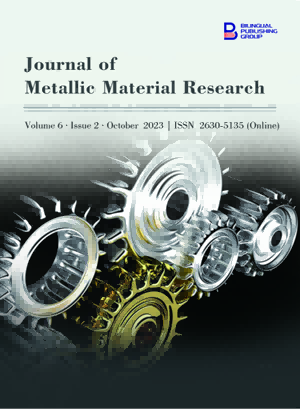
Journal of Metallic Material Research【Google Scholar】
金属材料研究
出版社
新加坡双语出版社
类别
材料科学
ISSN
2630-5135 (O)
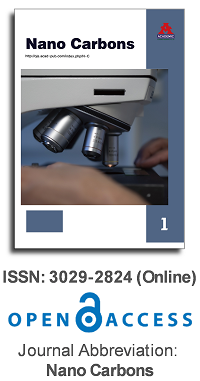
Nano Carbons
出版社
学术出版社
类别
材料科学
ISSN
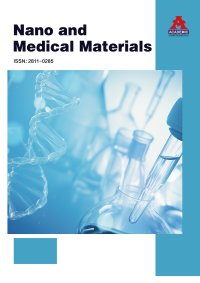
Nano and Medical Materials
出版社
学术出版社
类别
材料科学
ISSN
Advanced Sustainable Materials and Technologies
出版社
学术出版社
类别
材料科学
ISSN
Biomimetic Materials for Energy Systems
出版社
学术出版社
类别
材料科学
ISSN
免责声明
本站仅提供正规合法期刊咨询服务,非期刊官网,不涉及出版事务,无投稿绿色通道,录用结果以出版商通知为准,第三方商标归原权利人所有。